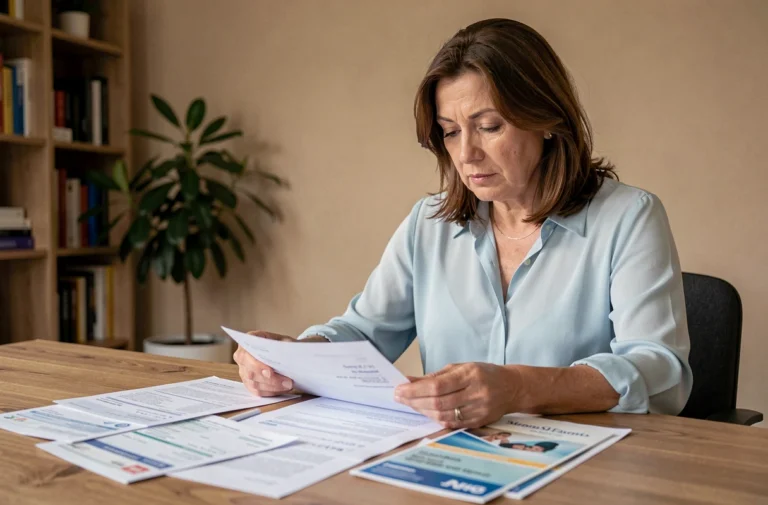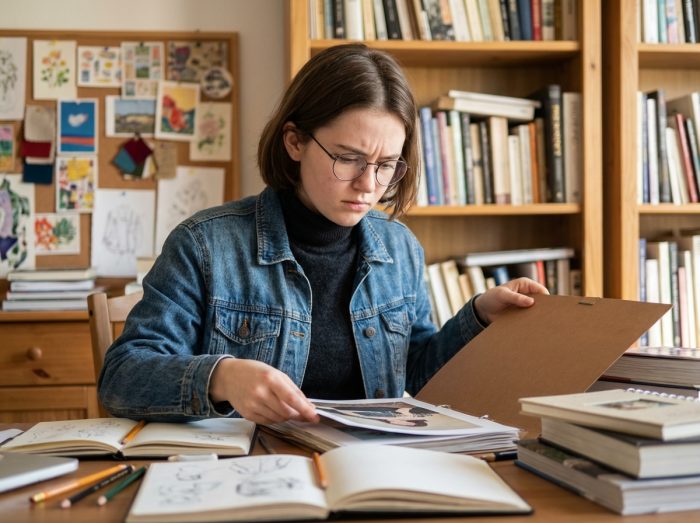
Every year, the numbers speak for themselves: places in the prestigious French art schools are becoming scarce, in the face of a massive influx of applications. A mandatory passage through Parcoursup for most, but some institutions impose their own rules, adding steps or tests outside the usual calendar. The selection is based on academic records, the motivation letter, and, most often, an artistic portfolio judged according to the sometimes impenetrable criteria of each jury.
It’s impossible to wait until the last minute: deadlines come early, well before other fields. You need to gather administrative documents, select your most convincing works, and assemble a well-structured artistic project. Expectations vary significantly between public and private institutions, requiring each candidate to engage in targeted preparation work, with no compromise on standards.
Overview of art schools: what options after the baccalaureate in 2026?
Across the country, from Paris to Bordeaux, from Grenoble to Dunkirk, France boasts a mosaic of higher art schools and national higher schools. Each cultivates its uniqueness, asserts its pedagogical choices, and offers methods that are its own. The curriculum generally begins with the DNA, national diploma of art, in three years, or the DNSEP for those who continue for up to five years. The first year allows students to acquire a solid artistic culture, experiment with practical work, before choosing between the art option or the design option.
In these schools, local identity and diversity take precedence. In Lorient, Quimper, or Rennes, graphic design intertwines with digital practices and contemporary creation. In Toulon, design embraces regional industrial realities. In Poitiers or Bayonne, the focus is on pure experimentation. These programs often benefit from connections with cultural actors, residencies, and workshops open to international collaboration.
To access the ESMA art school, the application must embody the uniqueness of the journey taken, the coherence of choices, and the understanding of the program’s expectations, whether it concerns art design, superior art design, or art option design. Here, there is no room for approximation: the jury watches for the approach, values the creative process, and assesses motivation. The recognized support and the multiplicity of pedagogical approaches provide a formidable springboard for young creators determined to assert themselves.
Parcoursup and admissions: understanding the key steps to apply confidently
Parcoursup now regulates the access path to prestigious art schools, whether it is a higher art school, a national higher school, or a specialized public institution. Starting in January, registration kicks off: you must express your wishes, then assemble and validate your application before the date set by the Ministry of Higher Education. For many competitions, scholarship students benefit from a waiver on registration fees, a lever to make these schools more accessible.
But submitting an application is not enough. After the pre-selection, candidates are called to a series of competitions: written tests, oral exams, and sometimes analysis of works via videoconference. The juries, composed of teachers, artists, and professionals, scrutinize the coherence of the journey, the originality of the works, and the ability to argue one’s choices. Rigor does not tolerate any deviation: a delay, a missing document on Parcoursup, and the application is gone.
The platform now centralizes all steps: convocations, eligibility results, final responses after deliberation. Candidates must therefore carefully monitor their personal space to avoid any unpleasant surprises and react quickly to each notification.
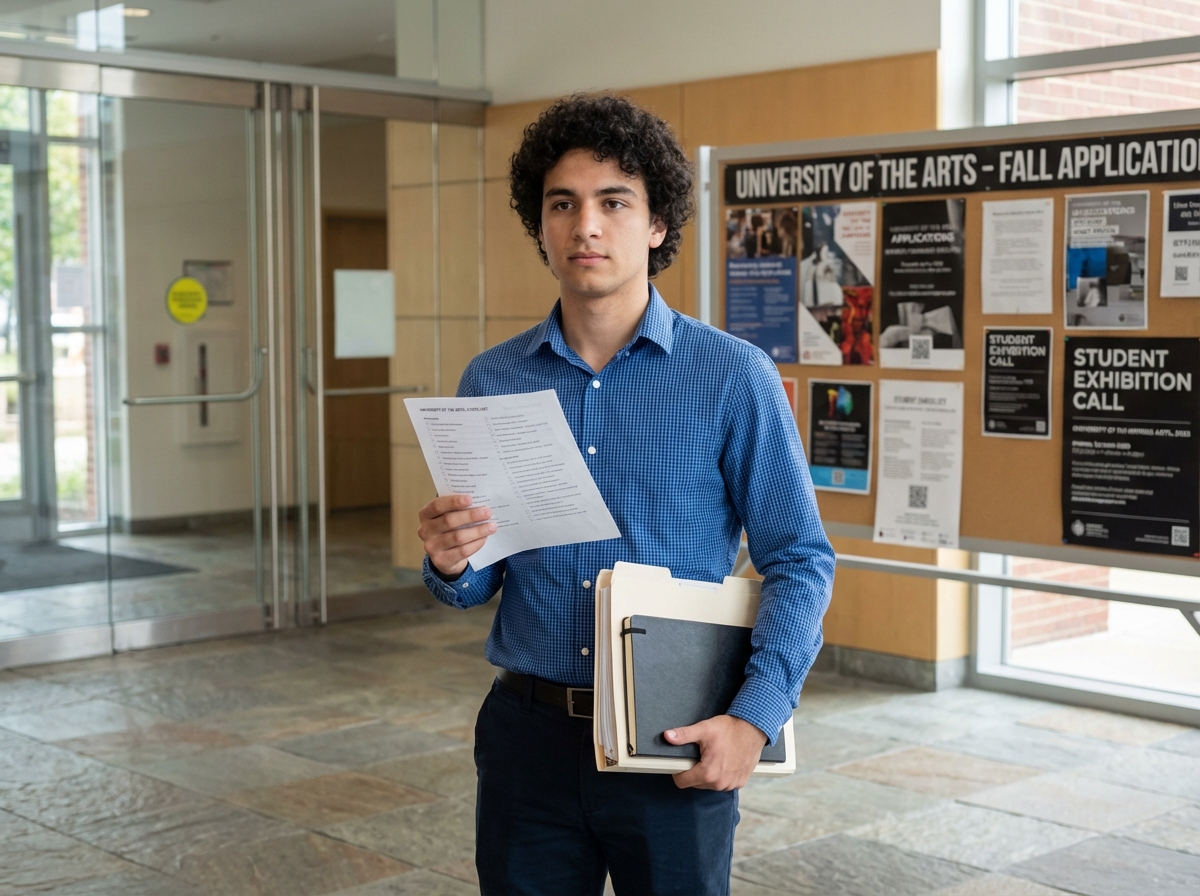
Building a strong application and an inspiring portfolio: tips to stand out to the juries
A convincing application relies on the coherence of the journey, the clarity of the project, and the strength of the works. The prestigious art schools seek portfolios that reveal an intimate approach, a thirst for exploration, and questioning of media. The portfolio should be prepared with care: it is better to have a reduced but accomplished selection than a compilation of unfinished attempts. A solid series, supported by precise annotations, makes a stronger impression than a succession of drafts.
The motivation letter should clarify the intention. It must show a logical progression in the journey, a marked interest in the art or design option, and a real understanding of the targeted school. Empty phrases should be avoided: anchor your inspirations, mention artists or projects, and convey that your curiosity is already fueling a structured reflection.
For the portfolio, variety of media is an asset: drawings, plastic research, models, short videos, graphic explorations. Some juries are also convinced by a research notebook, a testament to the journey, the evolution of ideas, and the ability to bounce back after an attempt. Here are some guidelines for structuring a dossier that captures attention:
- Select between 10 and 20 major artistic works, those that truly tell your story.
- Each project deserves a title, a concise statement of intent, and mention of the technique used.
- Pay attention to presentation: a readable, clear layout demonstrates professional commitment and facilitates evaluation.
Preparing this application means combining anticipation and rigor. Each piece must reflect a necessity, a personal involvement, far from any opportunistic seduction strategy. The juries perceive sincerity, the ability to question the world, and to open new perspectives. This makes all the difference, especially where creativity knows no quotas.