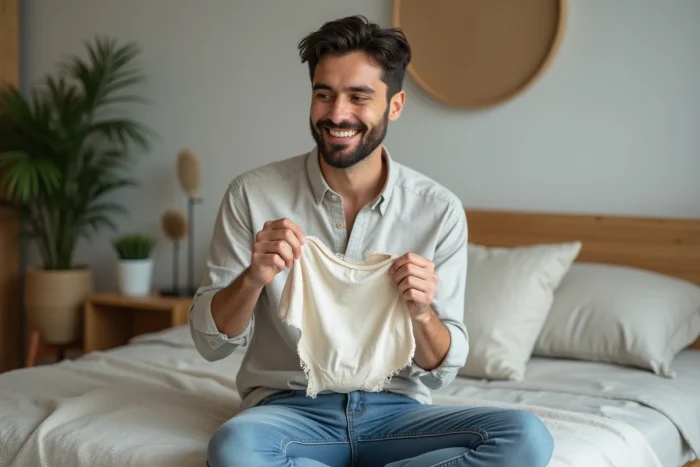
A wash at 30 °C is not always enough to eliminate persistent stains on the bottoms of panties, even with specialized detergent. Some synthetic materials retain traces more easily and resist traditional stain removers. The use of percarbonate or Marseille soap, although reputed to be effective, has unexpected limitations depending on the type of fabric.
The accumulation of residues can promote the development of bacteria and alter the longevity of the underwear. Combining several methods with simple gestures can optimize stain removal while preserving the quality of the fibers.
Why do panty bottoms stain so easily?
The bottom of a panty, brief, or boxer faces everything that daily life throws at it. For women, vaginal discharge, these physiological leukorrheas that ensure intimate balance, inevitably leave marks on the fabric, white or yellowish, especially when moisture lingers. Menstruation, menopause, incontinence, and sometimes certain infections (fungal infections, vaginitis, vaginosis) exacerbate this phenomenon. The underwear then becomes a discreet witness to the body’s variations.
On the male side, sweat and occasionally ejaculate regularly find their way into underwear, especially on hot days or during physical exertion. Models made from synthetic fibers trap moisture more easily, which promotes unpleasant odors and the development of bacteria. The Escherichia coli bacterium, stemming from traces of feces or poor hygiene, easily finds refuge in damp fabrics, increasing the risks of cystitis or irritations.
Keeping underwear damp or stained provides a fertile ground for fungi and bacteria. Wearing a panty for too long paves the way for irritations, infections, and persistent odors. The material, the fabric’s ability to wick moisture away, and the frequency of changes make all the difference when it comes to limiting the appearance of stubborn stains. Conversely, the benefits of not wearing briefs are sometimes highlighted: limiting maceration and reducing the risk of irritation, as detailed on the page “The benefits and drawbacks of not wearing briefs – Optimizen”.
In France, social norms encourage changing underwear daily, but reality adapts to habits, climate, or lifestyle. Delicate skin, affected by psoriasis or eczema, must be particularly cautious: even slight prolonged moisture can trigger discomfort or real skin issues.
Effective methods for stain removal without damaging your underwear
The choice of fabric is a fundamental question when it comes to tackling stubborn stains. Cotton is appealing for its softness and tolerance to repeated washes, an undeniable asset for sensitive skin. Tencel Lyocell, a next-generation cellulosic fiber, sometimes goes even further: it wicks moisture better, slows bacterial proliferation, and limits the formation of unpleasant odors. Elastane, integrated into the knit, ensures flexibility and support without compromising the robustness of the underwear.
To tackle stains from vaginal discharge, blood, or sweat, there are several simple actions to adopt:
- Rinse immediately with cold water to prevent proteins from embedding in the fibers.
- Choose gentle products: authentic Marseille soap or hypoallergenic detergent without overly strong bleaching agents.
- Prefer a low-temperature wash (30 to 40°C). Synthetic fabrics, being less absorbent, handle short cycles and frequent washes well.
The s synthetic panty doesn’t necessarily deserve its bad reputation: it dries quickly and doesn’t necessarily promote infections. However, for reactive skin, cotton remains a safe bet. The composition of the fibers is worth knowing, as each wash and each product choice impacts the lifespan and intimate health. Bleach and aggressive stain removers should be avoided: they damage fibers and colors. Moderation and regularity are what ensure the longevity of the brief.
Little tips and precautions to keep your panties impeccable every day
Changing underwear daily, a widely shared reflex, contributes to comfort and prevention of irritations or infections. After sports, during menstruation, or in the heatwave, vigilance should be heightened: a damp or soiled panty quickly becomes a favored ground for bacteria. Dr. Phryné Foulc reminds us that vaginal discharge is perfectly normal and marks the panty without consequence, provided that dirty laundry is not allowed to stagnate.
Today, there is a variety of models: brief, boxer, thong, jockstrap. Each has its audience and strengths: the brief, making a comeback, appeals for its support and discretion; the boxer offers more thigh protection; the thong is barely noticeable while providing a sense of ease. This diversity adapts to all days, balancing comfort, aesthetic concerns, and freedom of movement.
To limit moisture, opt for breathable materials like cotton or technical fibers. Wash at low temperatures, use a gentle detergent to preserve the elasticity and color of the fabric. Prefer air drying: it protects the quality of the fibers and helps limit bacterial proliferation.
Innovations continue to emerge: the smart panty, capable of tracking certain physiological parameters, is gradually making its entrance. Yet, the essentials remain unchanged: proper hygiene, regular renewal, and well-chosen materials ensure impeccable underwear, day after day. Habits evolve, but the quest for lasting intimate comfort never wanes.